

12 minute read
Aug 2026

What's Next for Robotics? Humanoids, Physical AI — or Both?





The race to build human-looking robots can risk obscuring a much bigger opportunity. Physical AI is making a broader ecosystem of specialized machines more capable, creating new possibilities for automation and value creation.
Blame it on R2-D2 or C-3PO, the lovable droids from the Star Wars franchise. Or even the evil cyborgs in The Terminator. Humanoid robots have been the stuff of sci-fi for decades, and attempts to recreate them in the real world periodically make headlines. Honda’s ASIMO robot, for example, made a brief splash in 2000.
Humanoids are grabbing the headlines yet again, attracting attention and rolls of venture capital funding. It’s the buzz that frustrates Albert Meige, Director of Blue Shift at Arthur D. Little (ADL). The very term “robots” comes from the Czech word “robota,” which means “forced labor,” but thinking that humanoids will be placed on a production line to assemble small parts is delusional, he says.
There’s good reason for a less-than-sunny outlook toward humanoids, experts, including Meige, argue. First, the approaches toward intelligence don’t work well enough — yet. Vision language action (VLA) models, a combination of large language models (LLMs), video, and action, don’t have enough training datasets. LLMs might have the entire internet to feed on, but VLAs need real-life robotic execution of hundreds upon thousands of tasks, data for which is sparse at best (more on this later).
And while humans use their hands effortlessly thanks to a whopping 27 degrees of freedom, today’s best robotic hands have 20–22. While that’s very good, it’s not good enough, especially to execute fine sensing and feedback loops. Also, degrees of freedom alone don’t capture the full dexterity gap, particularly tactile sensing and force control.
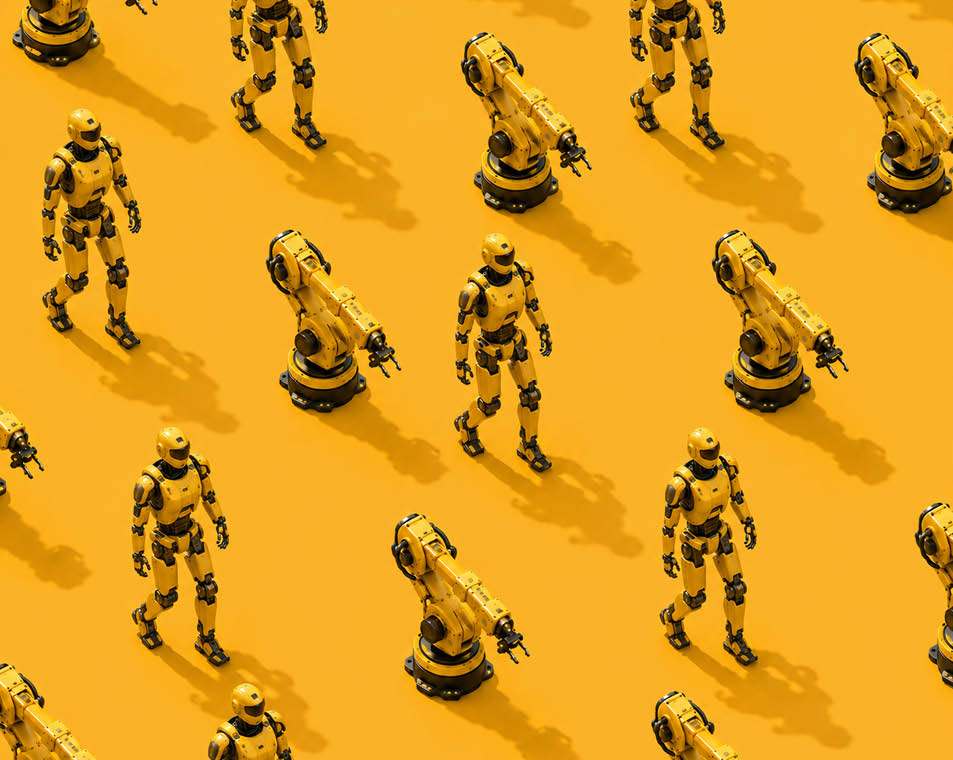
Do humanoids have legs to stand on?
Karim Taga, Managing Partner and Global Head of Functional Practices at ADL, offers a different perspective. He makes the case that humanoids can galvanize further investment in robotics R&D, even if he suspects their image as job-gobbling villains may need a branding overhaul. The dream of general-purpose humanoids will only be realized when dexterity rivaling that of humans can be combined with enough autonomy to function in a dynamic and uncontrolled environment.
Taga is more optimistic about how quickly humanoids will combine human capabilities, such as vision, tactile perception, listening, and communication. He sees early production accelerating, but broad deployment, especially in homes, is much further away. Taga points to countries with aging populations, like Japan, where the idea of a robot caretaker could take root. The country’s birthrate hit a record low in 2025, and its population, now ~122 million, is projected to fall below 100 million by 2060. Robots might ultimately have to help meet growing caregiving needs.
While a video involving a Unitree humanoid unexpectedly kicking a child at a martial arts demonstration went viral, Taga says incidents like this underscore the need for clear, enforceable guardrails governing humanoid behavior. “You need to acknowledge that humanoids are dumb and that they come from the factory with only basic functionalities. You need to train them on particular use cases and also train them on what not to do,” he says.
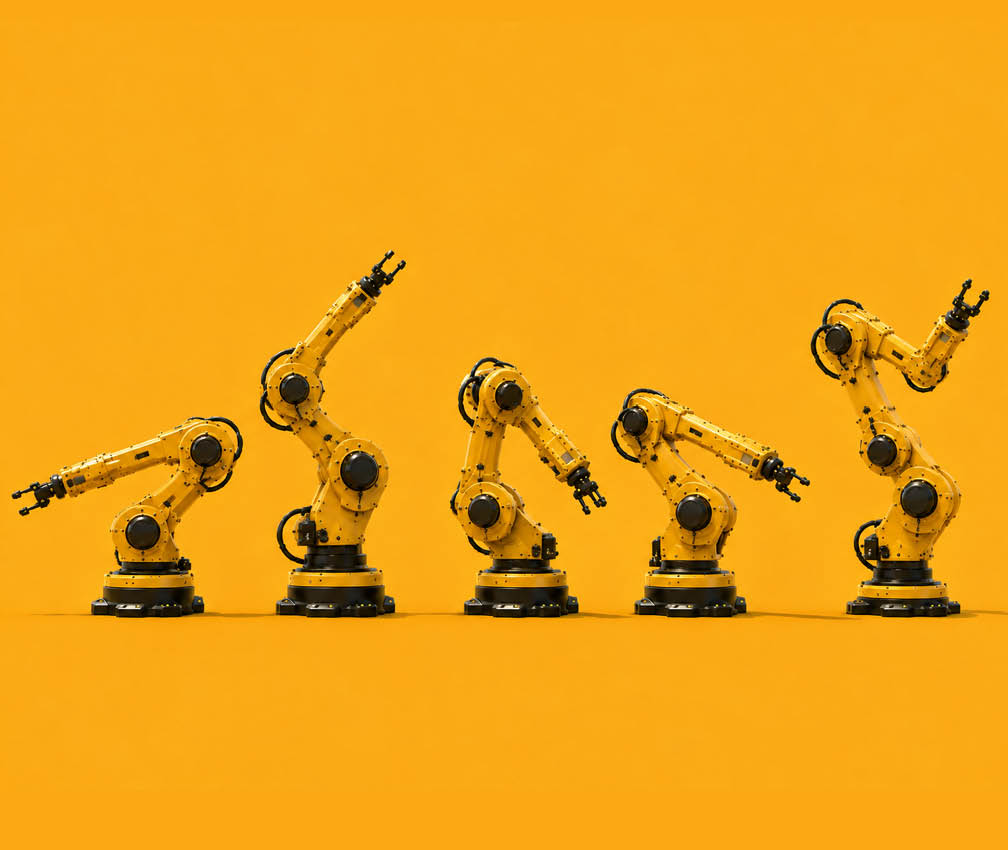
Oscar Mendez, Director of AI and Data Science at warehouse automation company Locus Robotics, is less convinced that humanoid adoption will accelerate in leaps and bounds. After all, “you don’t need a humanoid to vacuum your house if you have a Roomba,” he says. And if you must have them in humanoid form, stack the models vertically and throw a trench coat over the assembly, Mendez jokes. He predicts that high ROI in robotics will instead come from heterogeneous fleets of specialty robots, potentially including humanoids, with each performing the tasks it does best.
You need to train [humanoids] on particular use cases and also train them on what not to do

A segment of physical AI
Humanoids dominate the current conversation, but they’re only one small part of physical AI, which refers to intelligent and autonomous machines that can perceive the real world, make decisions, and execute physical actions. It’s defined by embedded intelligence and does not restrict itself to a specific humanoid form. The market for physical AI, currently at around US $18 billion, is growing at an impressive clip. Near-term forecasts peg the market at somewhere between $60–$100 billion by 2030.
To understand the value of physical AI, it helps to track the evolution of robotics.
Historically, a neural network might be trained to recognize a limited set of objects, or reinforcement learning might teach a robot one constrained task, says George Chowdhury, Principal Robotics Analyst at market research firm ABI Research. These systems are often brittle, which means they work well only within the conditions for which they have been trained but struggle as variation increases.
The value of physical AI lies in making conventional robots less brittle, in smoothing out bumps so they can perform well enough even in conditions they have not trained on. A little injection of physical AI, what Mendez calls “AI sprinkles,” allows the collective system to function better. “You don’t want AI to learn things that you already know how to solve; you want to let it use its capabilities to model the things that you don’t know how to solve,” he says.
Essentially, AI enables physical systems to cross the gap between what they can achieve and what we need them to do. Imagine a juddering robot arm that now moves more smoothly. That improvement is (mostly) thanks to physical AI filling in the gaps.
The swooning over humanoid robots notwithstanding, the industry is using physical AI in smaller but very tangible ways. “We’re seeing robots moving faster and navigating more effectively through space, with more energy efficiency. These improvements are significant, but they’re just not the sexy ones,” says Aaron Prather, Director of Market Intelligence for the Association for Automation Advancement (A3). “Non-sexy” applications such as warehouse automation and welding will benefit from these new and improved gains from physical AI, he adds.
Meige tempers the excitement a bit. “At the end of the day, (thanks to physical AI), we may have robots that are a little bit more versatile and autonomous, but they will still operate in constrained environments in the short to medium term,” he predicts.
At the end of the day, (thanks to physical AI), we may have robots that are a little bit more versatile and autonomous, but they will still operate in constrained environments in the short to medium term
Data & other bottlenecks
For physical AI to make further inroads in robotics, it will need data and the right contextual models. Often, LLMs fall short. For example, picture an image of a cat behind a couch. While an LLM-based AI might be able to describe the two objects, it can struggle to place them in space. Is the cat right behind the couch or many feet away? VLAs are trained to address this but are still subject to similar limitations. To address this nuance, there’s movement toward adoption of world models, which understand the world in a more deliberate fashion and can predict how the physical environment will respond to a robot’s actions.
Such foundation models help Locus Robotics create accurate maps of warehouses — solving the cat-and-couch distance problem — based on its proprietary training data. Rather than building a generic AI solution and trying to boil the ocean, Locus focuses on solving problems within a narrow domain. The company, for example, specializes in warehouse automation and uses that focus to its advantage. “A lot of the scaled and inherent ambiguities that are inherent in generic off-the-shelf systems go away when you fine-tune for a warehouse domain,” Mendez says. “For example, you know you don’t need to train a vision system to detect giraffes and elephants in a warehouse.” Instead, the company creates and trains warehouse foundation models by leveraging data from 17,000 field robots.
While some companies are building world foundation models from live deployments, others use synthetic data. To create datasets, companies teleoperate a robot to have it execute a set of needed tasks and use that information as the “ground truth” upon which to build synthetic data through simulation. Synthetic data can be useful in some applications, though translating simulations to the real world remains challenging, particularly for tasks involving contact and manipulation. Mendez advises against using synthetic data, arguing that the time spent mapping that trained model to real-world data is just not worth it.
Another major challenge for physical AI and robotics is achieving energy efficiencies that are not outweighed by AI’s own energy consumption, Prather says. Humanoids, in particular, will face economic hurdles if they can’t deliver meaningful ROI, Meige predicts. “There’s no killer app that’s making these robots absolutely necessary. Yes, they can dance, but what purpose does that serve?” he asks.
Humanoids, in particular, will face economic hurdles if they can’t deliver meaningful ROI
The future: Heterogeneous robots & geopolitical flexes
In the near and long term, expect to see an ecosystem of different physical AI embodiments with complementary specializations and task capabilities, Mendez says. The orchestration of large fleets — picture hundreds, if not thousands, of robots at work — will also take center stage. “Orchestration helps integrate equipment, people, and goods in a holistic way and delivers something that’s bigger than the sum of its parts; it’s probably one of the most exciting things happening in the industrial side of robotics,” he adds.
The same principle applies inside the AI systems controlling those robots. Rather than relying on one all-purpose AI model, a system can combine multiple specialized neural components, orchestrated to work together as one — not unlike Mendez’s earlier joke about models stacked under a trench coat. “It’s a lot of little pieces of neural machinery put into a harness, and to the user it looks indistinguishable from a single model. Internally they will all act in concert,” he points out.
Also look for geopolitical grandstanding in the field, Chowdhury adds. “China has exerted significant pressure on the conventional robotics market, making them in large quantities and for a third of the price of traditional industrial robots so they’re flooding the market and terrifying stakeholders,” he says.
Indeed, Chinese firms accounted for 80% of global humanoid installations in 2025. The country’s “Humanoid Robot Action Plan” targets the national deployment of 100,000 humanoids by 2027, according to the Robotics Center’s “State of Robotics 2026” report.
The newest Chinese five-year plan has set aside hundreds of billions of dollars in subsidies for AI and robotics, so expect even more humanoid efforts coming from a country that already churns them out rapidly. The US has taken notice. In late July 2026, it banned new humanoid robots from China to protect its own technology buildout.
Focus on value, not flash
Exactly how (and which) technological advances in robotics play out over the long term and how they affect deployment at scale is uncertain from today’s vantage point. Nevertheless, executives must attend to a few “no-regret” moves today, Meige advises in his latest Blue Shift report “I-Robot.” He says, “First, identify use cases that are relevant for your business. Develop an ecosystem of partners who can help flesh out these use cases with pilots. Make expectations and gates or guardrails for deployments clear.”
Even a 5% gain from one robot can compound across entire fleets. “For that, you don’t need your robots to do a kung fu-style choreography or have very dexterous hands,” Meige says. “What they have today should be good enough to see gains.”
Prather agrees. “Buying into physical AI and robotics is like buying a car. The sales guys are going to try and upsell you regardless,” he says, “but ask yourself if you really need all the bells and whistles or just something that’s going to get you from point A to point B.”
“Robotics is not new, and AI is not very new either, but we see these fields converging to enable new possibilities,” Meige says. “Humanoids will capture attention while more specific physical AI will capture value.” Indeed, enterprises that use physical AI to their advantage will identify the right tasks to gauge technology fit, generate the right data, and redesign workflows to have embedded AI systems and humans working together.
Robotics is not new, and AI is not very new either, but we see these fields converging to enable new possibilities
Key Takeaways
- Assess where physical AI can add value to improve the versatility, autonomy, and adaptability of robotic systems.
- Focus on business value; start with the problem you need to solve and prioritize applications with a clear path to meaningful ROI.
- Invest in clean, accurate proprietary data as the most prized asset for the near and long term. Robust homegrown data leads to robust physical AI models for your specific use cases.
- Oversee low-risk pilots and test the reliability, safety, and strength of guardrails before scaling.
- Ensure change management training that addresses the cultural aspects of coworking with robots, no matter what form they take.