
10 minute read
Oct 2026

PRISM Q4 Articles 2026 Alex Hynes
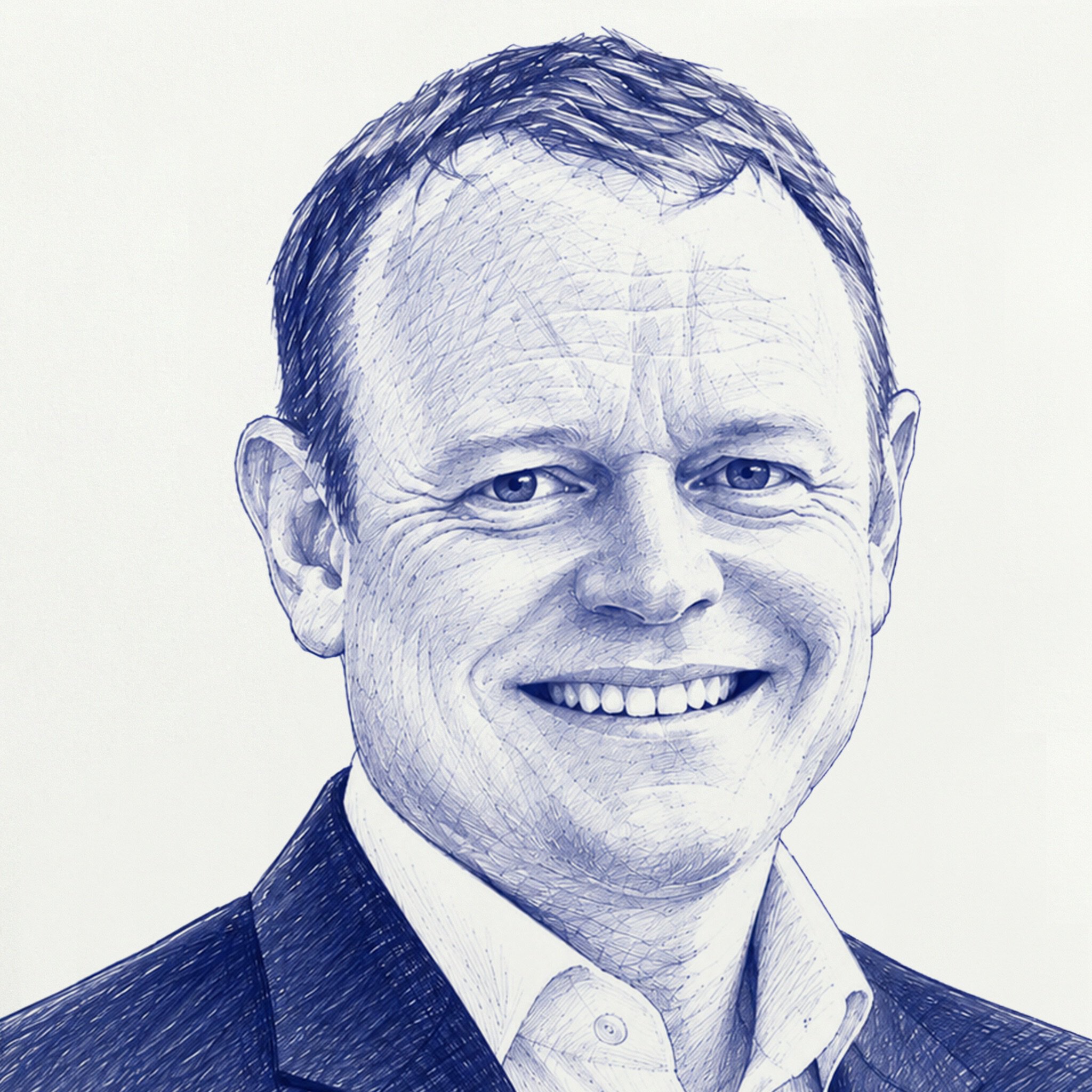
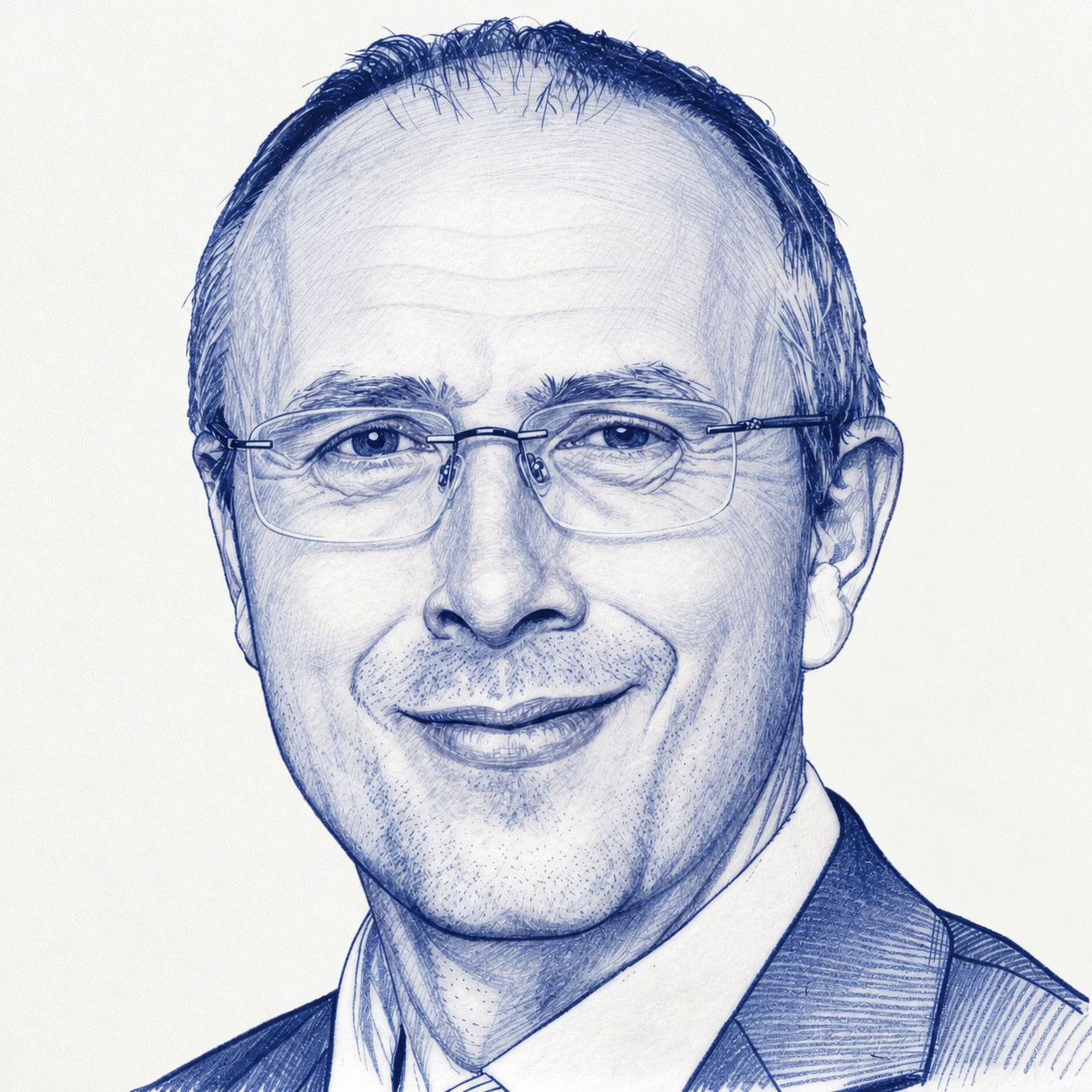
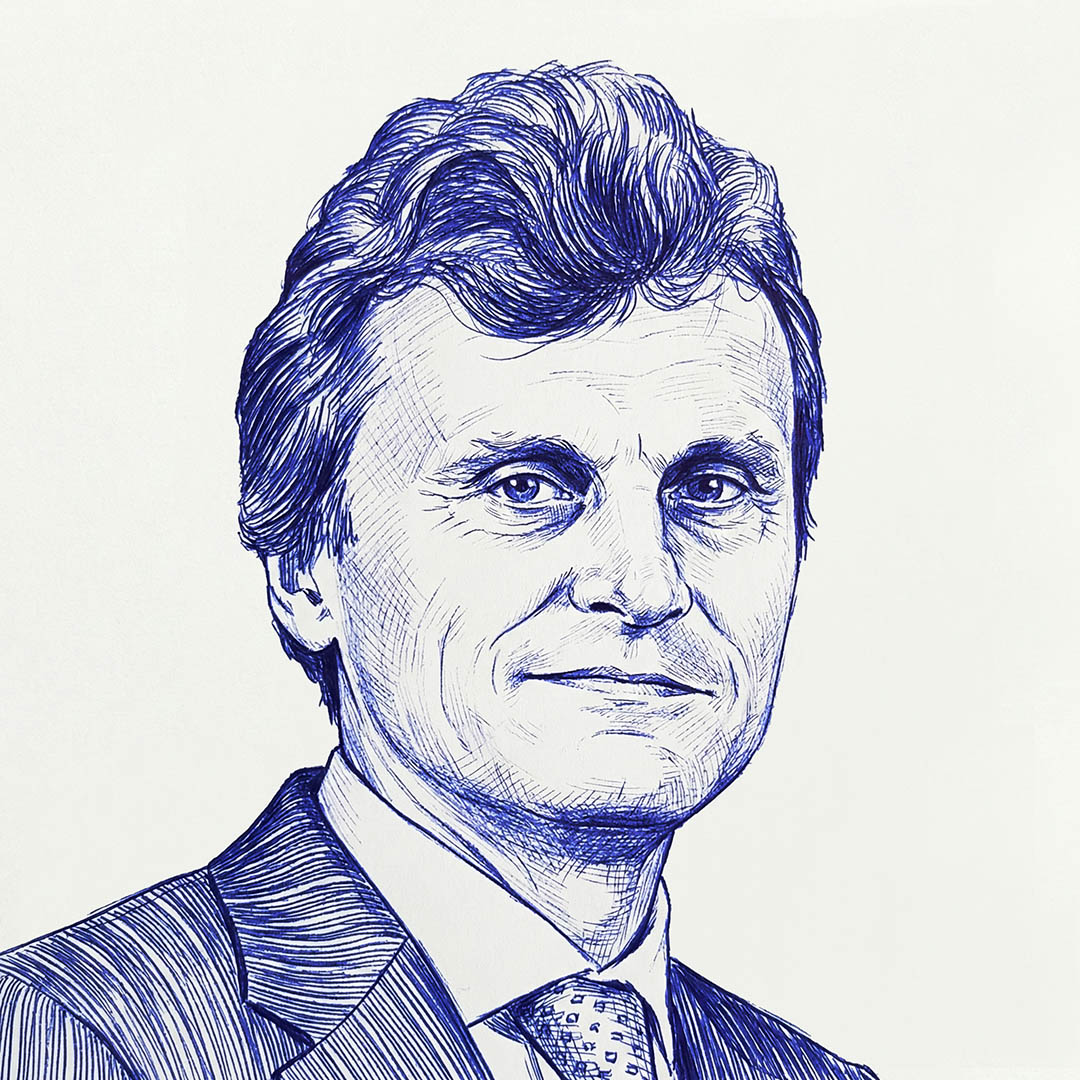
Britain’s railway is undergoing a once-in-a-generation restructuring, replacing the franchising model by bringing 14 train operators together under the newly formed Department for Transport Operator (DFTO), integrating track and train units, and ultimately creating Great British Railways (GBR).
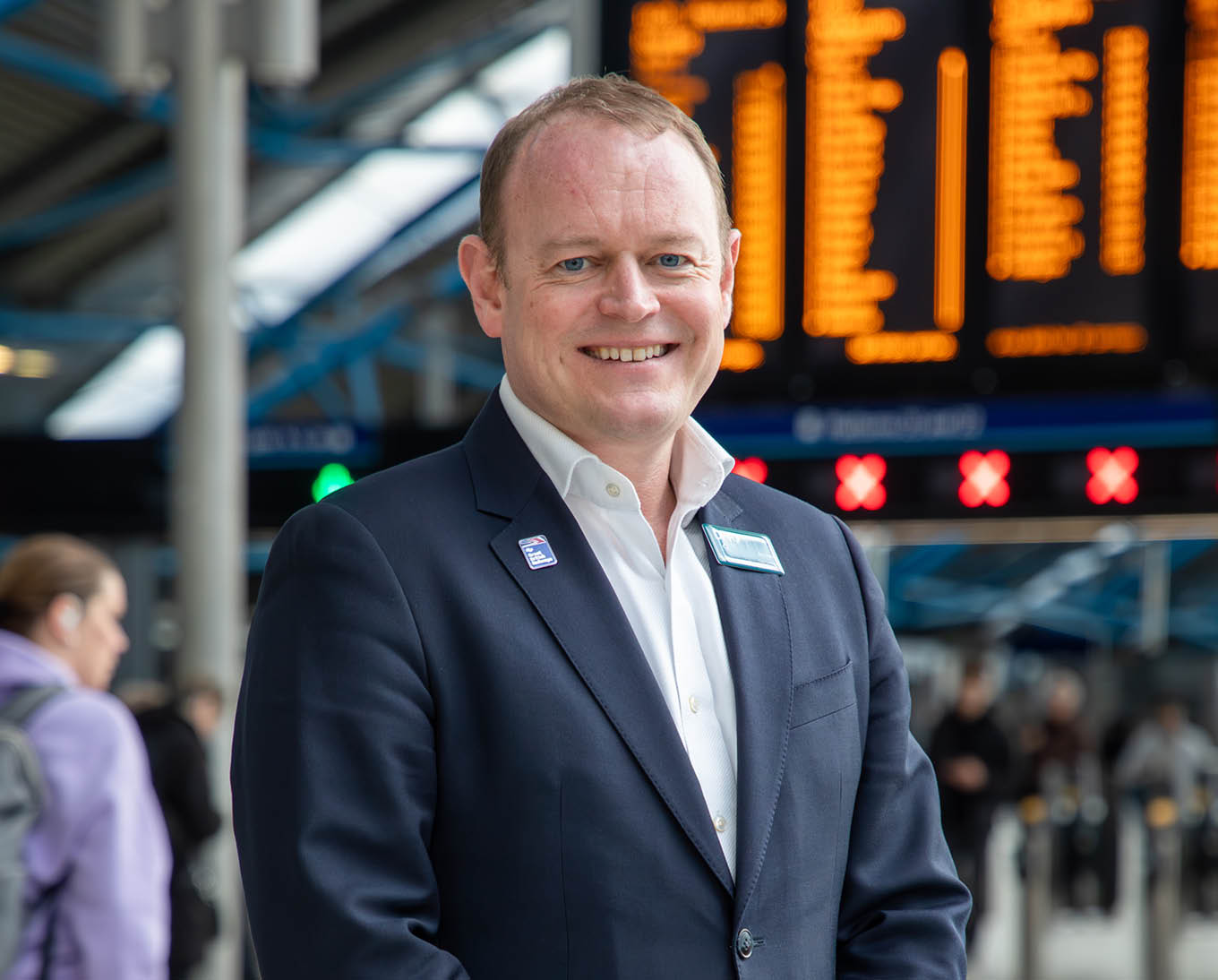
Alex Hynes, CEO of DFTO, sits at the heart of this huge transition and reflects on his philosophy for running national rail operations.
“One of my weaknesses is that I can be accused sometimes of oversimplifying complex situations, but I genuinely believe that there is power in simplicity. Bringing simplicity to complex situations is part of my method; it all comes down to looking at things through the customer lens,” he says.
Alex’s career has shaped the way he leads. Originally trained as a transport economist, he quickly realized that he was much better at organizing people and things than being an analyst or a regulator. A self-confessed “franchising geek,” he began bidding for rail operation franchises with the Go-Ahead Group before becoming Commercial Director of UK train operating company London Midland at just 30. He soon went on to become Managing Director of Northern Rail. At the time, this was the UK’s largest train operating company — but one of the worst performers. In just two years, he successfully turned it around to be among the best.
He later moved to Scotland where for nearly seven years, he was Managing Director of Scotland’s Railway, a post privatization alliance between train operator ScotRail and network manager Network Rail Scotland.
“I went to Scotland to get the experience of running infrastructure, running a more integrated railway in the public sector. I had seven wonderful years, loved it.”
In April 2024, he was headhunted for a move to the government side as Director General for Rail Services in the UK’s Department for Transport (DfT). Alex describes his 21 months as a senior civil servant as an invaluable opportunity to understand how government operates, from working with ministers to navigating decision-making across Whitehall. During that time, he helped introduce a seven-point plan to improve train crew management, contributing to a 50% reduction in cancellations caused by crew shortages. He believes further improvements are still to come.
Right now, as CEO of the intentionally short-lived DFTO, Alex is sanguine about his role. “I started doing this job in December. I’ve been very fortunate to work with many fabulous people. I’ve had a few lucky breaks, and here I am!” he says.

Making a success of the new publicly owned railway
The new GBR, which will employ more than 97,000 people, will be under intense media and public scrutiny from the word go. While renationalization of the railways enjoys a majority of public support, plenty of commentators are voicing concerns. Fares are undeniably expensive, yet government subsidies have also increased sharply — from £2 billion in 2000–2001 to £12 billion in 2024–2025.
Nationalization per se won’t change these fundamentals. Some commentators fear that GBR could become a ghost of the late, unlamented pre-privatization British Rail. So, what is Alex’s view on how to make it work?
“Our job at DFTO is to deliver against the full breadth of the scorecard — it’s safety, people, performance, customers, and finances. Bringing train operating companies into public ownership isn’t a magic bullet for all the problems facing the railway, but it enables us to integrate track and train and create single accountable leaders for each geography,” he explains. “One of the things that’s already working very well is our colocation with friends and partners down the corridor at Network Rail.”
Alex believes success depends on having a simple vision and mission, supported by clear objectives. His mantra while at the DfT was “performance up, subsidy down.” Of his task now, he says, “We need to reduce the level of subsidy — we’re not being asked to cut costs. Which means that revenue counts.”
“The government decided to freeze fares, so revenue growth needs to come from volume. That means we need to give customers a brilliant experience. We need to deliver the timetable the market wants and needs,” he says. “Post-COVID, we ended up with a leisure-led railway. But now, the fastest-growing segment is commuting and business. Employers in cities are insisting more and more on five days in the office. There’s good potential for volume growth if we get the service right.”
Bringing simplicity to complex situations is part of my method; it all comes down to looking at things through the customer lens

Looking through the customer lens
Alex is very clear about how the public will judge GBR’s success, and it’s all about the customer experience.
Alex says DFTO is bringing together customer, fares, ticketing, and retail functions to create a single customer experience strategy. The goal is to replace the current mix of passenger charters, compensation policies, and service standards with one consistent customer promise across the network. Citing poor Wi-Fi as an example, Alex says plans are underway to roll out faster onboard connectivity across more mainline services, following encouraging trial results that he believes could be a “game changer.”
Making the most of better data and achieving better service consistency are also key parts of Alex’s customer experience strategy.
“We now have this thing called the ‘Rail Customer Experience Survey,’” he says. “We’ve always had customer surveys, of course, but this is double the size, and we get data in real time. I’ve looked at it several times today. We already live and breathe performance, but now we’re getting data allowing us to live and breathe customer perception as well. We’ve never had that before. All of this means we can tailor services accordingly.”
“For UK rail, the average customer satisfaction is actually quite good — around 88%. But the average hides an enormous variation. As we roll out the GBR brand, we need to make sure that the quality is more consistent everywhere,” Alex says. “Ultimately, it’s the outliers that will affect the national conversation most.”

Devolution is just what we need for rail
Britain’s new Prime Minister, Andy Burnham, is a famously strong proponent of devolution and has openly called for legislation to grant statutory powers to regional mayors. Fortunately, this aligns very well with Alex’s own philosophy for the railway.
“One of my leadership philosophies is a strong belief in devolution and holding people accountable. All things being equal, decisions taken close to the customer will be better than decisions taken hundreds of miles away,” he says.
“I remind people a lot that mayors want an effective transport system that citizens can take for granted. But outside London, this has eluded us ever since buses were privatized and everywhere was completely deregulated,” Alex says. “But now England will have, for the first time, an integrated national transport strategy, a unified national railway, and the government devolving powers to re-regulate buses. These three things will be powerful in creating a joined-up transport system for places outside London that haven’t had it for a whole generation.”
Alex says legislation should establish the right framework without becoming overly prescriptive. “The message I want to give my business leaders is to strengthen and deepen their relationship with the city mayors because all they want is a transport system that looks more like the one in London. Why would we not want to be a part of that?” he says.
All things being equal, decisions taken close to the customer will be better than decisions taken hundreds of miles away

Leading to create a positive culture
One of the biggest challenges ahead is bringing together different organizations, each with their own culture and history. And middle managers are often singled out as the main barriers and blockers. What does Alex think about this?
“I think when senior managers complain about the middle management layer, it’s a reflection on them. If you’re getting frustrated with the way these people are working, it must be down to the system that’s been created,” he says. “As senior leaders, your job is to create an environment in which other people can perform.”
“This means having a simple plan that everyone knows and incentivizing delivery of the plan,” Alex continues. “For example, when I was at Northern Rail, we weren’t just the worst train-operating company for customer satisfaction; we were also the most profitable — which is interesting in itself, isn’t it? One of the things I had to do was win the argument with managers that, no, we care about performance, people, customers, and safety as much as profit. So, I put my money where my mouth was and launched a performance-related pay scheme for all managers where they could earn 2% each for people, profit, performance, customers, and safety. In the end, I had a management team that knew what they had to achieve and got rewarded for it.”
Alex feels equally strongly about how leaders engage with their people.
“I always try to go to them rather than drag them down to London because I want to see the place, use the product, and avoid the danger as a senior manager where people are saying one thing, but it’s not necessarily borne out of reality. I think you need to see and feel and touch railways,” he says.
“Also in working with unions. Trade unions are our partners, and actually, on the vast majority of things we agree — we want a successful, growing railway that employs highly skilled, decently rewarded people,” Alex says. “Do we have disagreements? Yes, in a few narrow areas, but that doesn’t mean a full-scale falling out. I have good personal relationships with all the general secretaries. Informal conversations often help to find the win-win. Talk is work!”
Alex agrees that running UK train operations is in many ways much more complicated than running an independent company. There are 1.6 billion customers per annum, and 17 organizations delivering the service. He sums up his approach quite simply.
“It doesn’t mean we shouldn’t try to create this customer-focused simplicity — that’s what most people don’t do. You’ve got to line the business up, all face the same direction, and repeat it clearly every moment,” he explains. “I like to have a simple, clear plan, surround myself with brilliant people, and let them get on with it. I like fixing things because I care deeply about public service. That’s what gets me out of bed in the morning.”
As our conversation with Alex ended, a famous Steve Jobs quote sprang to mind: “Simple can be harder than complex. You have to work hard to get your thinking clean to make it simple. But it’s worth it in the end because once you get there, you can move mountains.”
It looks like Alex might be on to something.
Trade unions are our partners, and actually, on the vast majority of things we agree — we want a successful, growing railway that employs highly skilled, decently rewarded people
Key Takeaways
- Drive for simplicity, with clear vision, mission, objectives, and plans.
- View the business through the customer lens to focus on what matters most, supported by the best possible real-time data on customer experience.
- Incentivize delivery against balanced scorecards to align priorities and reinforce accountability.
- Empower smart people and let them get on with it.
- Go to your teams — don’t always drag them to your office and recognize the value of informal conversations.
This interview was conducted by Phil Bulman, Partner, ADL, and Rick Eagar, Associate Editor and Senior Advisor, ADL.