
6 minute read
Apr 2025
CONTRIBUTORS

Samir Imran
is a Partner in Arthur D. Little’s Dubai office and a member of the Travel, Transport & Hospitality practice.

Iyad Halabi
is a Manager in Arthur D. Little’s Dubai office and a member of the Travel, Transport & Hospitality practice.

Jawad Nassar
is a Consultant in Arthur D. Little’s Dubai office and a member of the Travel, Transport & Hospitality practice.
In an increasingly urban world, cities must meet the needs of their residents, businesses, workers, and tourists. They must be customer centric in their services and experiences and promote safe, healthy, livable, and sustainable environments, all at an acceptable total cost of living.
With global competition to attract businesses, people, and tourists, failing to be customer-centric risks cities falling behind their rivals, impacting their reputation, attractiveness, and, ultimately, revenues. This could lead to a cycle of decline and a disengaged, disinterested population.
Delivering a customer-centric urban experience relies on cities becoming smart. Smart cities can be defined as those that harness digital technologies and data to improve experience, operational effectiveness, and overall efficiency. They are not a new concept, but in many cases, they have not delivered the benefits that they promised. Early examples often focused too much on technology, creating soulless, empty environments, or were public sector–led, meaning they failed to meet user needs.
The urban world needs a new approach. By combining smart cities with customer centricity, public authorities can cocreate genuinely welcoming, livable, and sustainable environments that deliver what customers want, when and where they want it — whether residents, businesses, or tourists. Data and AI underpin this change — creating cognitive smart cities that adapt to deliver real-time services rather than reactively personalizing the experience after the fact. However, customer centricity is not straightforward, requiring cities to overcome various challenges and often reshape internal administrative cultures, as this article explains.
What Makes a City Customer Centric?
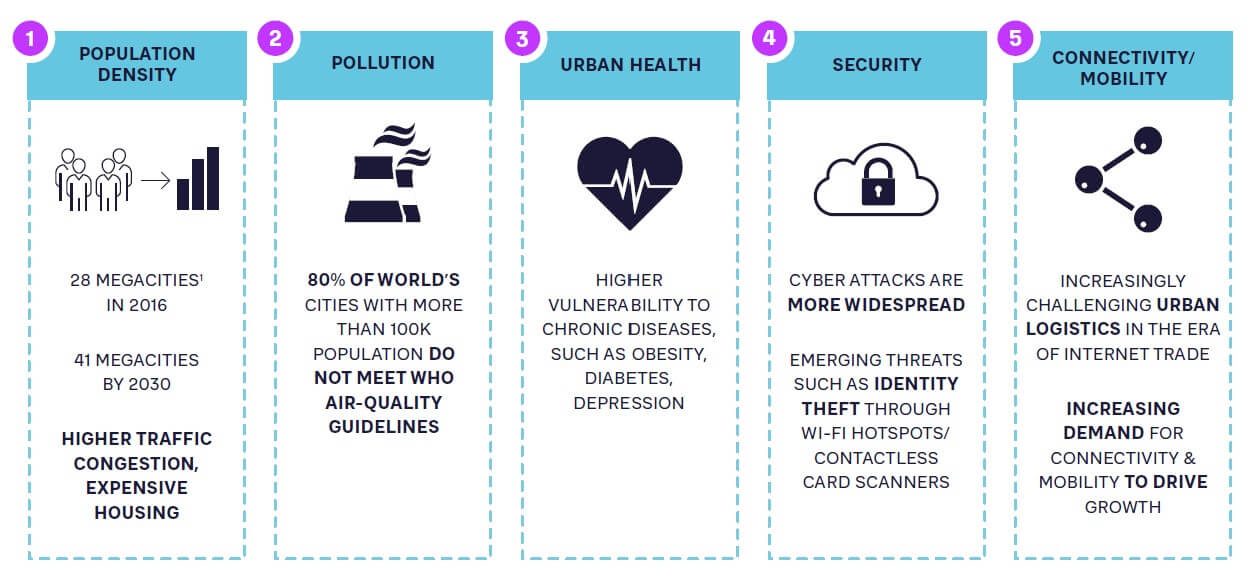
Urban areas are already home to over half of the world’s population, a figure expected to rise to two-thirds by 2050, according to the World Bank. They are also engines of the global economy, responsible for 80% of the planet’s GDP. In the past, much of this urban growth has been at the expense of residents and businesses, with expansion leading to increased rent/property prices, pollution, toxic air quality, congestion, poor housing and education, and an overall drop in livability (see Figure 1). A lack of transparency and responsiveness to people’s needs has undermined engagement and made living or working in a city neither pleasurable nor cost-effective for many.
CONTRIBUTORS
Samir Imran
is a Partner in Arthur D. Little’s Dubai office and a member of the Travel, Transport & Hospitality practice.
Iyad Halabi
is a Manager in Arthur D. Little’s Dubai office and a member of the Travel, Transport & Hospitality practice.
Jawad Nassar
is a Consultant in Arthur D. Little’s Dubai office and a member of the Travel, Transport & Hospitality practice.
Figure 1. The challenges of urbanization
By contrast, a customer-centric city provides a pleasant, sustainable, and engaging experience, with the right services easily available; good transport links and options; a healthy environment; and plentiful homes, schools, and amenities. It serves as a net attractor of residents, commuters, businesses, and tourists, with a virtuous effect on reputation, revenues, and further improvements to the experience. Customer-centric cities offer residents an attractive total cost of living based on seamless access to the right services, transport options, and public/private spaces.
Challenges to Customer-Centric Cities
Given its advantages, every city aspires to be customer centric. However, a range of challenges create roadblocks.
Resources
Particularly in the developing world, the investment required to implement customer-centric infrastructure may be lacking, or ROI may be unclear. Long-term projects, such as mobility networks, take time to complete, requiring sustained resourcing and ongoing political and community support to avoid government changes impacting progress. For existing cities, room to maneuver and innovate can be limited by the current urban environment, including buildings, roads, and transport networks.
Vision
Without an overall vision, city developments risk being piecemeal and uncoordinated. They may deliver some benefits but diminish the experience in other areas, such as by adding to congestion or pollution. Cities need a strategic and practical vision, delivering on overall objectives while providing tactical programs that benefit all stakeholders. This vision must define what the city wants to be primarily known for to differentiate it from others.
Buy-in from Audiences
While some developments clearly deliver benefits, citizens and businesses may struggle to support initiatives that impact their daily lives negatively in the short term, such as disruption from construction or implementation of pedestrian-only zones. Engagement and transparency are key, communicating the longer-term benefits while attempting to mitigate any negatives that development brings.
“Delivering a customer-centric urban experience relies on cities becoming smart”
Internal Cultural Change
City administrations are normally organized in a departmental structure, with teams focusing on their specialism, whether infrastructure, health, or public parks. Customer centricity requires departments to work together seamlessly, which can require internal cultural change to refocus people on the customer and their needs, rather than traditional performance metrics.
Attracting and Retaining People and Business
Many authorities are creating new cities or districts on greenfield or brownfield sites. Turning these sites into vibrant living communities relies on attracting people, an issue that has impacted cities such as Songdo, South Korea. There, a top-down design, isolated location, high cost of living, sterile environment, and reliance on private sector funding have combined to put off potential residents — by 2023, the city only housed around one-third of its target population. Starting with a customer-centric vision, combined with community activation and attractive, cost-effective property options, is therefore vital to avoid similar pitfalls in other cities or new districts.
“Without an overall vision, city developments risk being piecemeal and uncoordinated”
How Do You Build a Customer-Centric City?
Many cities of all sizes globally have built a strong reputation for being customer centric. While these offer inspiration for urban planners and city councils, it is vital to understand that every city is different, and what may work in one scenario may fail in another for reasons as diverse as weather, cultural norms, or people’s expectations. There are substantial differences between the potential for transformation in well-developed cities, brownfield districts within cities, and greenfield sites with no existing infrastructure. However, whatever the context, the following best practices can shape both strategy and implementation, helping create smart cities that deliver lasting benefits.
Understand Your Audience
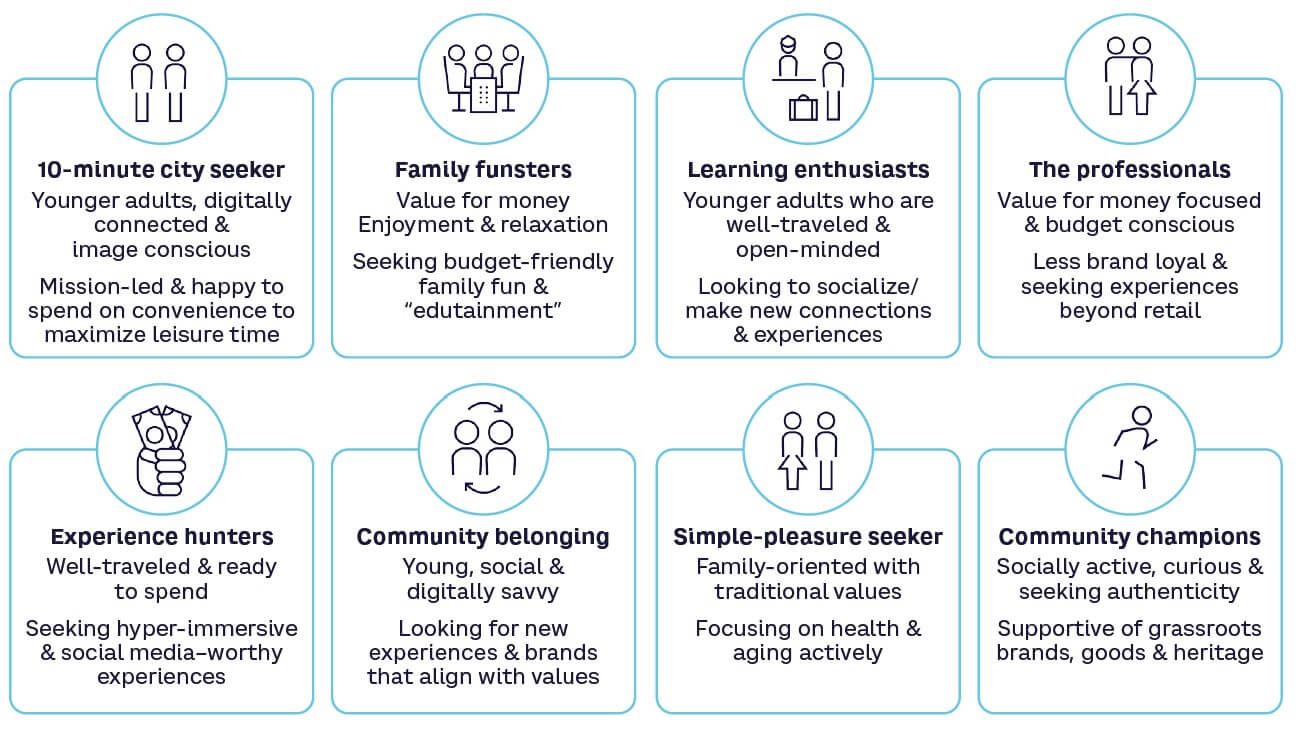
As with any program that aims to be customer centric, the key starting point for cities is to understand their audiences and those audiences’ needs and requirements. For example, residents, commuters, and tourists will likely have differing expectations. Different segments within these demographics, such as age groups and lifestyles, will also have a variety of requirements, as the example in Figure 2 shows.
Figure 2. User Segmentation by Mindset