
3 minute read

Oct 2025

None of the business leaders in our interviews welcome the tariff regimes declared by the US administration, including companies based in the US. However, the uncertainty surrounding how the tariffs will ultimately apply is seen as potentially damaging for all markets, including the US — perhaps even more so than their scale.


Many business leaders expect to manage the impacts reasonably well, as they have been localizing their supply chains and manufacturing capacity since the pandemic to improve resilience to global disruptions. However, other industries with highly globalized operations and supply chains, such as the automotive and logistics sectors, are more significantly affected by tariffs than others (e.g., the construction and finance sectors). Some business leaders point out that the impact of tariffs is forcing a clear pivot away from the US toward China and Southeast Asia. However, others expect they will prioritize further US-based partnerships and acquisitions.

“I’m a firm believer that tariffs will not work for anybody, and they actually destroy growth on both sides.”
[Industrial group]

 “This new politics is giving a lot of uncertainty in the market. It doesn’t give a lot of benefit [to] anyone. Reshoring production is not something you can do in one to two years. The US doesn’t have all [the] industries to manufacture everything.”
[Energy group]

 “We are somewhat better prepared today for this tariff environment. Because of what we have experienced with COVID, we changed the way we are set up.”
[Healthcare group]

 “80% of our operations are very local. So it makes us quite immune to [the] direct impact of those increasing tariffs.”
[Construction group]

 “None of us ever thought we’d get to a situation where we’d see tariffs north of 50% [or] even over 100%. The tariffs are so high, everything grinds or stops on China/US trade.”
[Logistics group]

 “The priority of a US-based acquisition is probably higher now than before, or a partnership… you want to be more present in the US than before.”
[Manufacturing group]


Achieving greater supply chain resilience

Businesses in industries most affected by tariffs have been further reviewing their supply chains to diversify sources and operations, including not just Tier 1, but also Tiers 2, 3, and beyond. In many cases, this further builds on changes already made as a result of COVID-19. Looking beyond tariffs, some leaders also recognize that the geopolitical climate has increased the risk of major disruptions, such as blockage of access to critical materials and/ or global trade flows due to conflict and the politicization of strategic suppliers. Supply chain strategies include gaining better intelligence on component criticality, improving systems and tools to extend visibility to Tier 2 and beyond, and increasing geo-diversification and continuity planning. Some companies are supporting their suppliers in re-localizing the entire supply chain, including providing investment assistance.

“We are working to diversify suppliers that are in the areas where the tariffs are not applied, or in reality, to see if there are suppliers in the US (e.g., for maintenance).”
[Energy group]

“We are working with our suppliers to try to diversify the source of supplier Tier 2, but also sometimes Tier 3, to make sure that the whole supply chain can be resilient.”
[Construction group]

“We have constructed, over the years, an ecosystem of 7,000 suppliers, a real patchwork. In the past, we were always thinking about simplifying by rationalizing by having bigger batches, etc. Well, we’ve stepped away from that now.”
[Industrial group]

“It’s very important to install what I would call an early-warning intelligence mechanism and really identify this at a very early stage.”
[Entertainment group]

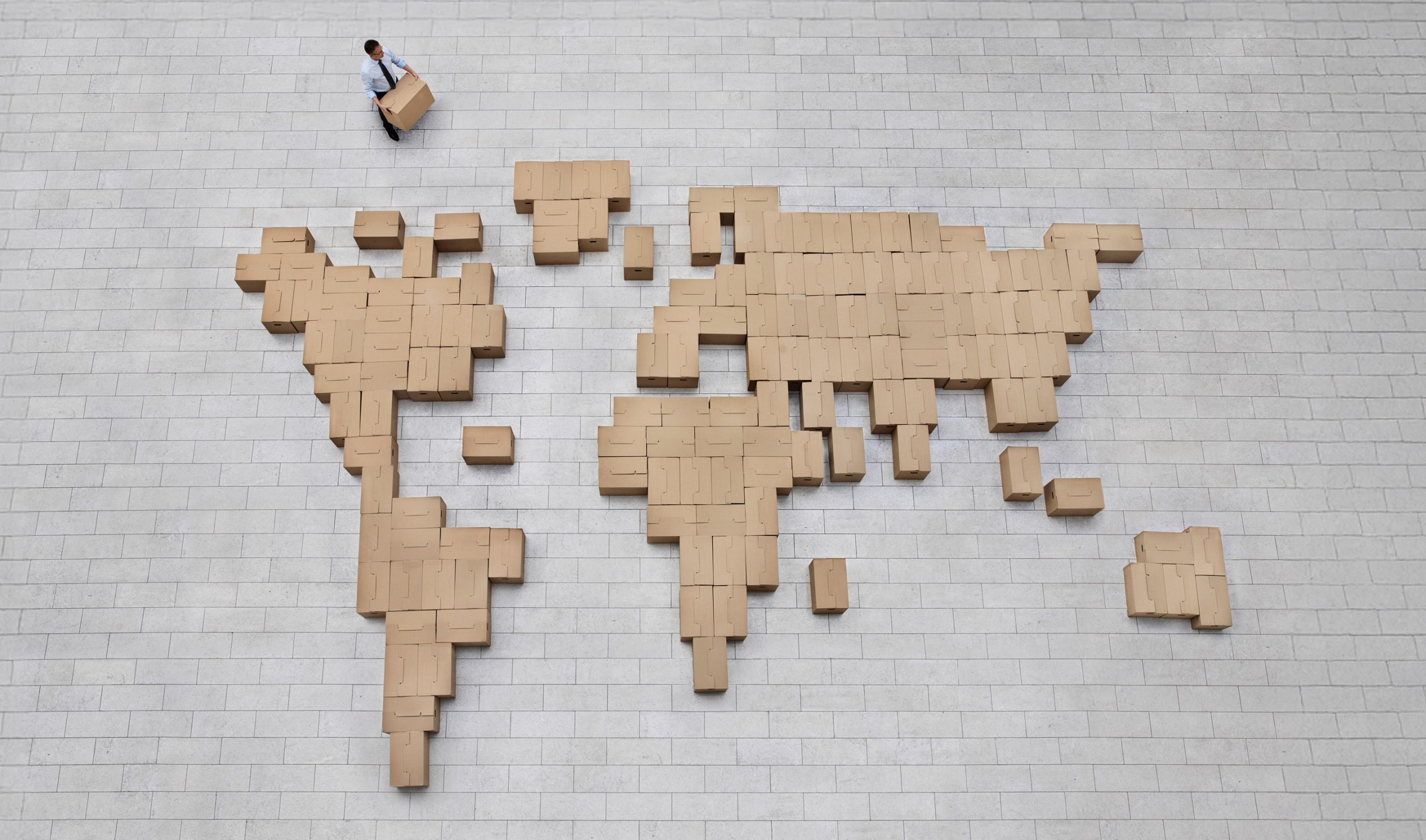
“Businesses in industries most affected by tariffs have been further reviewing their supply chains to diversify sources and operations”


Photo by Henrik Sorensen / Getty Images