

12 minute read
Jul 2026

Changing Lanes





The global automotive industry is in the midst of the most fundamental change it has ever faced. It’s an evolution that’s happening under the skin, hidden within the flash memory modules and processors that are gaining in power and importance in every modern car. It’s the shift to so-called software-defined vehicles, an inadequate and arguable term that attempts to reflect the increasing role that code plays in shaping the modern driving experience.
Software is not only defining how cars behave but also enabling that behavior to evolve over time. This, in turn, raises consumer expectations, with buyers looking for vehicles that surprise and delight from day one — and continue to impress for years to come.
This revolution in vehicle architecture is coming at a time of unprecedented turbulence in a global marketplace tangled by a dizzying web of regulation. Legacy, deadline-focused software development paradigms and heavily siloed organizations are breaking under the strain, resulting in delays that cost billions of dollars.
To navigate this transition, automotive executives must rethink traditional organizational structures. We spoke with leading industry experts to identify failure points in legacy models and identify better ways forward.
HISTORY & ITS BURDENS
Traditionally, if you wanted to solve a problem in a car with a piece of software, you did it at the source. Controllers for features such as anti-lock brakes or stability control were located where they were needed, performing discrete tasks and nothing more. The teams and suppliers that built them were organized the same way.
“We’ve been putting software in vehicles since the 1970s, but it’s usually been smaller, siloed teams working on very specific functionality within the vehicle,” says Sam Abuelsamid, VP of Market Research at Telemetry and former engineer at a Tier-1 automotive supplier.
This created a degree of internal autonomy. “Individual teams could take their module, their actuator, their sensor, and go off into a corner and work in isolation of the broader vehicle,” notes Gary Cygan, Director of Platform Engineering at General Motors (GM). The result was an internal corporate structure punctuated by silos, individual fiefdoms of dedicated engineers working on their own tasks. How they got the job done didn’t matter. As long as they wrapped things up in time for the deadline, everybody was happy.
That isolation is not without its advantages, but time has shown that it carries some significant disadvantages. One is the burden of supporting countless disparate systems across numerous vehicles. This baggage is increasingly slowing down the older manufacturers and proving a disadvantage in the face of younger competition.
“Some new entrants have the ability to move faster; they don’t have the burden from a legacy perspective that some traditional car companies have,” says Justin Moon, VP of Core Product Engineering at QNX. “They have no older vehicles, so there is no legacy to worry about.”
Add the challenge of providing over-the-air software updates to countless isolated components in a single vehicle, and you can start to see why everything is starting to come together.
ENDING ISOLATION WITH INTEGRATED ENGINEERING
Where once the most tech-forward cars featured dozens or even hundreds of discrete microcontrollers, the trend today is fewer, more powerful components. The modern vehicle is less a collection of disparate systems and more a unified platform running a collection of disparate routines and processes. Jörn Buss, Partner with Arthur D. Little’s (ADL’s) Automotive & Manufactured Goods (AMG) practice, says manufacturers have been increasingly asking themselves why their organizations don’t match their products.
“Why don’t we take a holistic view? Why don’t we see this as a truly integrated system and then have a team that really understands all of these things at the same time and programs it from the top down rather than from the bottom up?” said Buss.
This becomes an exercise in coordination and compromise. “Now, as you move software into one central place … these teams have to be coordinated and organized in a very different way,” Cygan said. “No longer can the brake team go off and do [its] own thing.”
It’s a fundamental change for many legacy automakers. “For me to now integrate my teams further basically means I need to more or less dissolve structures that I have been living with for 30, 40, 50 years, and that’s where a lot of the struggle comes in,” Buss said.
The result is more coordination and communication across teams. Cygan said this requires oversight and, ultimately, responsibility. “You need a centralized structure that is empowered to manage this coordination,” he said, someone who can make bigger calls that not everyone is going to love. “Sometimes you make decisions that are beneficial to the platform but detrimental to the specific vehicle.”
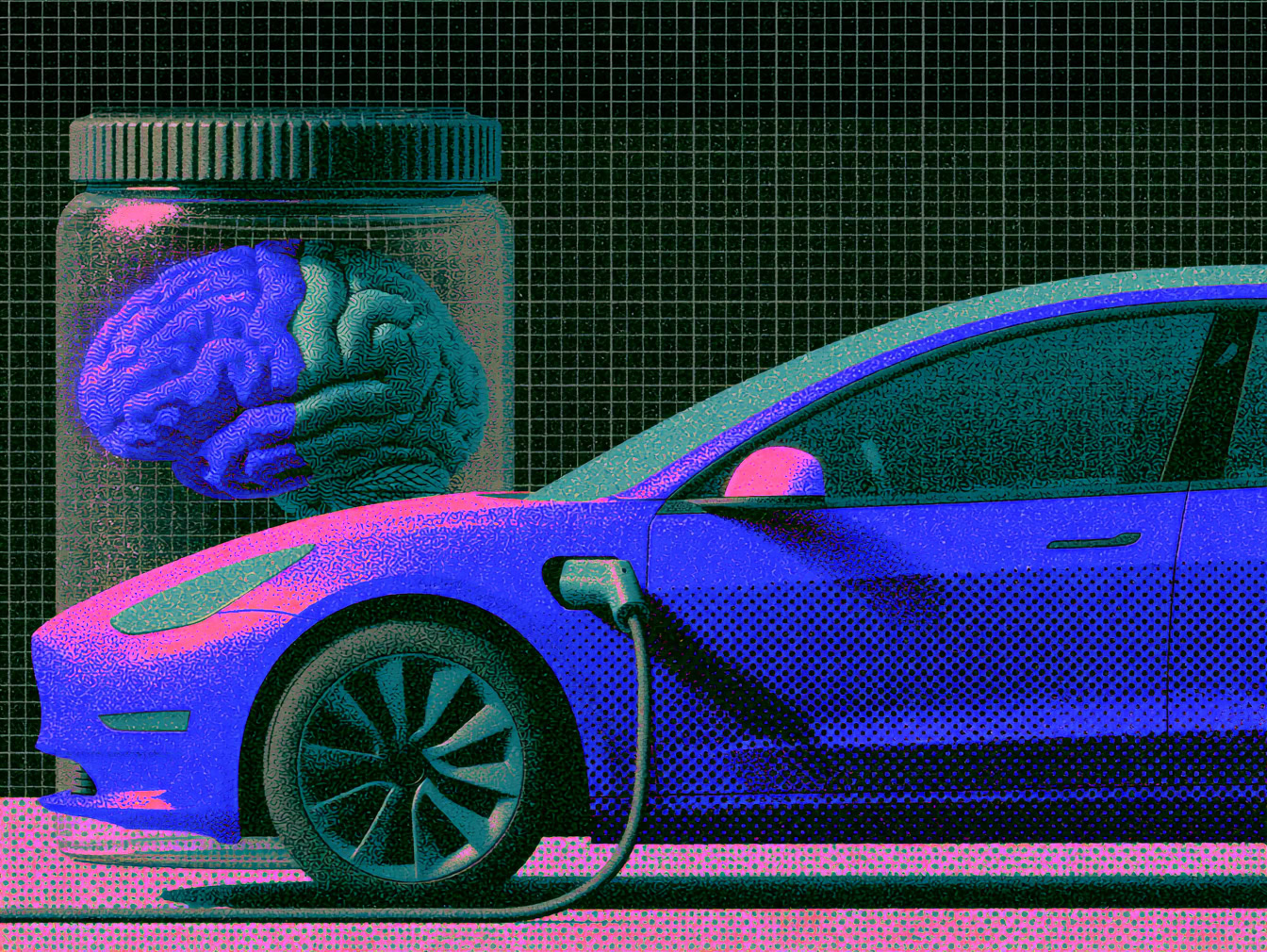
For many legacy manufacturers, this is as much a cultural shift as it is an organizational one.
For many legacy manufacturers, this is as much a cultural shift as it is an organizational one
ADJUSTING CULTURE & RISK TOLERANCE
Frank McCleary, Partner with ADL’s AMG practice, said that hiring rockstar leadership won’t necessarily help. A fundamental culture shift is mandatory.
“We’ve seen this with OEMs making big splashy announcements of senior hires … and then it slowly fizzles because culturally nothing ever changed. I think fundamentally that’s going to be the key,” says McCleary.
This doesn’t just mean things like casual Fridays or annual team retreats. Buss said that many automakers need to rethink everything, including their risk tolerance. “It’s a very big leap, and it exposes legacy manufacturers to enormous risk,” he said. “The last thing these legacy players want is more risk because they got burned so many times by being overexposed,” he noted.
The problem is that these companies are now competing in a global market being torn apart by upstart brands with a higher tolerance for risk and no burden of legacy systems. Buss calls this “China speed,” the ability to develop new cars in as little as 12 months. “We don’t know the exact outcome of that; there could be a reckoning moment for some of these newer players, too,” he said.
For now, however, traditional manufacturers need to adjust. “You need a thought leader behind that. You need significant risk management behind that. You need a lot of money behind it because you’re betting your house,” says Buss.
Increasingly, moving too slowly is becoming a risk in and of itself.
Many automakers need to rethink everything, including their risk tolerance
NEW RISKS, NEW COSTS
It’s an increasingly common and depressing headline: a new model meant to reinvigorate a legacy model’s offerings is delayed by weeks, months, or even longer because of software issues. It’s happening again and again, and the costs can be extreme. “You’re talking anywhere from a few billion to potentially tens of billions of dollars in losses from lost sales,” says Abuelsamid.
Many of these delays stem from the organizational challenges discussed above, but those aren’t the only landmines faced by modern automotive project managers. “If we keep sourcing to specific requirements instead of looking at the process holistically, we can change engineering all we want, but we’ll still be stuck with a procurement cycle that breaks everything apart,” says McCleary.
PLATFORMS, ABSTRACTION & CONTINUOUS INTEGRATION
Avoiding reliance on a single device supplier is critical amid continued supply chain uncertainty, and hardware abstraction layers are becoming increasingly important in that effort. In theory, this software development approach allows the same code to run equally well across multiple comparable chips.
In practice, reliably implementing these lower layers of software support is increasingly difficult and exactly the kind of challenge that has derailed many enterprise software projects over the years. When you layer in the added demands of the automotive sector, including regulations such as the EU Cyber Resilience Act (CRA) and standards like ISO/SAE 21434, which call for transparent update methodologies among other requirements, code complexity can quickly spiral out of control.
This creates opportunities for what are often called “foundational vehicle platforms” — solutions such as Wind River Studio, Elektrobit’s EB corbos, and Alloy Kore from QNX and Vector. These platforms take on the daunting task of delivering true hardware independence in a reliable, certifiable way, allowing developers to focus on the features and experiences that actually matter to vehicle buyers.
“We’re taking compliance integration off our customers’ plates,” Moon says. “That lets them redirect resources from work that is essential but non-differentiating — the kind of work their customers expect but won’t pay more for.”
This also greatly reduces the testing overhead for these projects, a problem that on its own can quickly get out of hand. “When you start building software, you need to design for testability from the beginning,” Cygan said. “You need to build the machine that validates the machine in parallel with the machine itself; otherwise, you’ll accumulate enormous technical debt.”
This sort of testing — continuous integration — is absolutely vital in enabling the kind of frequent, comprehensive updates that are not only increasingly required by cybersecurity regulations but are also expected by consumers.
Cygan said GM has made “significant investment” in building an architecture capable of reliably running hundreds of thousands of regression tests. “It’s absolutely critical to getting to weekly releases, which is our goal,” he said.
A task this massive raises another concern: who’s going to write all that code?
A task this massive raises another concern: who’s going to write all that code?
AI & THE TALENT CRUNCH
The use of a vehicle software platform can greatly reduce the overhead of automotive software development, likewise, reducing the degree of specialized talent required to implement it. Regardless, there’s still an overwhelming amount of code to generate.
“I think talent is the biggest and most fundamental problem of legacy OEMs in the Western world,” says Buss. This, he said, is largely thanks to talented engineers often choosing to focus on other, more enticing industries in the field of consumer electronics.
To fill that need, a popular approach is retraining current employees, but none of the experts we spoke with were bullish about the results. Abuelsamid said it can be effective for younger engineers. “For those used to working a certain way for 20, 25, 30 years, it’s a little more challenging,” he said. Buss said these programs often serve a more nefarious purpose: “I think in many cases, especially at Western OEMs, which are often unionized, this is simply a way to avoid firing those employees outright,” he said.
Retaining talent is key as well, and McCleary said that many manufacturers continue to rely on a traditional approach: “Throw a lot of money at senior talent and hope that works.” But even that has become increasingly difficult in an era when small startups can lure talent with stock options and, in some cases, achieve unicorn valuations. Some manufacturers have tried to respond by launching startups of their own, such as GM’s Cruise or Ford and Volkswagen’s Argo AI. So far, however, the failure rate of these is high.
To help address their staffing needs, many OEMs are turning to large language models (LLMs). But LLMs are not quite the panacea many modern AI startups would have you believe. “AI doesn’t turn a mediocre software engineer into an exceptional one, but it can make a really good software engineer that much better,” McCleary said.
That said, AI also has a role in generating the volumes of test data required to put modern driver assistance and autonomy systems through their paces. “AI has been useful for generating scenarios by taking data recorded from the vehicle and using it to create synthetic data,” Abuelsamid said. “That can mean changing the weather conditions, adjusting the lighting, and creating more scenarios to test against.”
AI has a role in generating the volumes of test data required to put modern driver assistance and autonomy systems through their paces
AN ECOSYSTEM OF ECOSYSTEMS
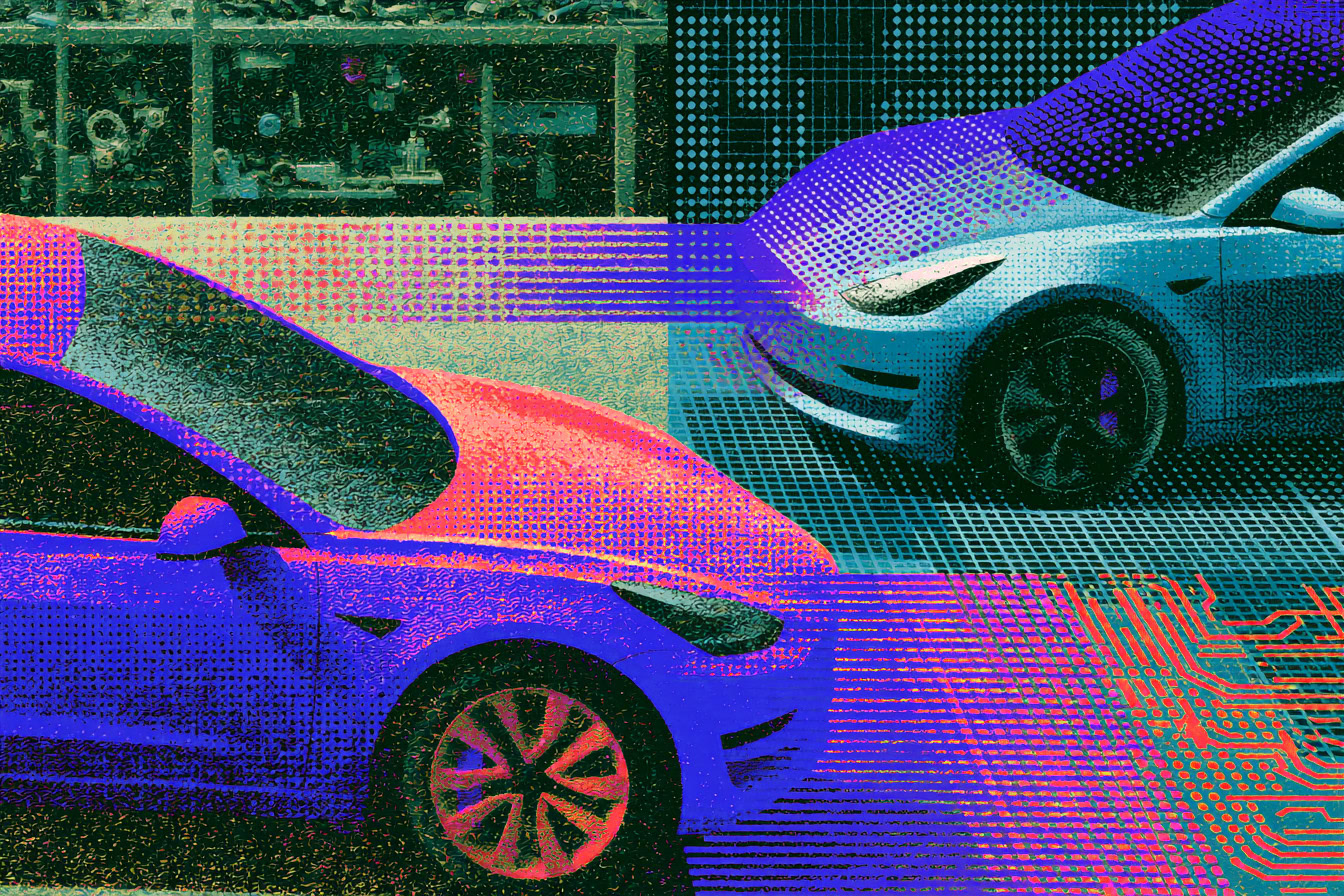
The challenges are not unique to any one brand. Across the global automotive industry, many major players have struggled to overcome them, while others remain stuck in the mire.
Moon believes the best solution is collaboration: “I think any one company has gone as far as it can go. Now is the time to start thinking about what it truly means to be an ecosystem of ecosystems.” That, he said, is “the next superpower.”
But with “great power comes great responsibility,” and for legacy automakers, that responsibility starts with preserving what makes them unique. This is, after all, an industry built on brands that coexist precisely because of their disparate ways of doing things.
Disparate ways, though, are not necessarily better ways. “The industry is rife with arrogance,” Buss said. “I say that very strongly because every company believes it builds the best possible products, which is partially true and partially not.”
Buss believes in admitting they cannot do it alone. By working with newer, younger competitors, manufacturers have a chance of finding success. “For them to make that leap is deeply, deeply respectful because they’re admitting they don’t have the ability to do it by themselves,” he said. “Will it work? I think time will tell.”
The challenges are not unique to any one brand
KEY TAKEAWAYS
- Legacy structure is the primary roadblock. Transforming to a software-defined model requires dismantling isolated, component-specific silos. Automakers must adopt a centralized, holistic software architecture to succeed.
- Cultural risk tolerance must increase. Legacy manufacturers are historically risk-averse, treating software as a safety-critical, single deployment. To compete with newer entrants, incumbents must take calculated risks to reduce development time.
- Procurement cycles must evolve. Traditional, fragmented procurement approaches are incompatible with modern, integrated engineering efforts.
- Foundational platforms reduce technical debt. Automakers should shift resources away from non-differentiating code. Utilizing third-party foundational platforms allows automakers to focus on customer-facing features.
- AI is not a replacement. LLMs cannot replace experienced engineers. However, AI is effective in testing scenarios.
- The future of the industry is collaborative. Overcoming the software transition requires legacy brands to swallow their pride. The most successful automakers will admit their limitations and integrate into an “ecosystem of ecosystems” through strategic partnerships.