
13 minute read
Nov 2026

Down to Earth: The Race for Space-Based Advantage
CONTRIBUTORS

Matteo Ainardi
Managing Partner, Aerospace & Defense

Sean McDevitt
Partner, Telecommunications, IT, Media & Electronics

Bela Virag
Managing Partner, Telecommunications, IT, Media & Electronics

Christoph Uferer
Partner, Telecommunications, IT, Media & Electronics

Ane Aanesland
Cofounder & CEO, ThrustMe

Carissa Christensen
CEO, BryceTech
Space is becoming a bigger part of our lives, whether you notice it or not. From supply chains to the internet, businesses are increasingly using satellites for a wide range of applications. And that looks set to accelerate.
Insurance might seem like an unusual industry to benefit from space, but consider a business that owns several buildings. To assess the fire risk, an insurer might use satellite imagery to monitor nearby vegetation and advise when to cut it back. After a storm or other incident, the same imagery can help identify any damage at a given location.
Instead of traveling to the site, which takes time and money, an insurer can assess potential damage from space, says Matteo Ainardi, Managing Partner at Arthur D. Little (ADL) who specializes in aerospace and defense. “The insurance community is one of the most advanced in the usage of space,” he adds.
But it’s not the only one. Across a wide swath of industries, space is becoming essential infrastructure. “A logistics company could use satellites to track assets, a telecom operator can extend terrestrial coverage using satellite connectivity, and an energy company can monitor its locations remotely,” says Sean McDevitt, Partner with ADL’s Telecommunications, IT, Media & Electronics (TIME) practice.
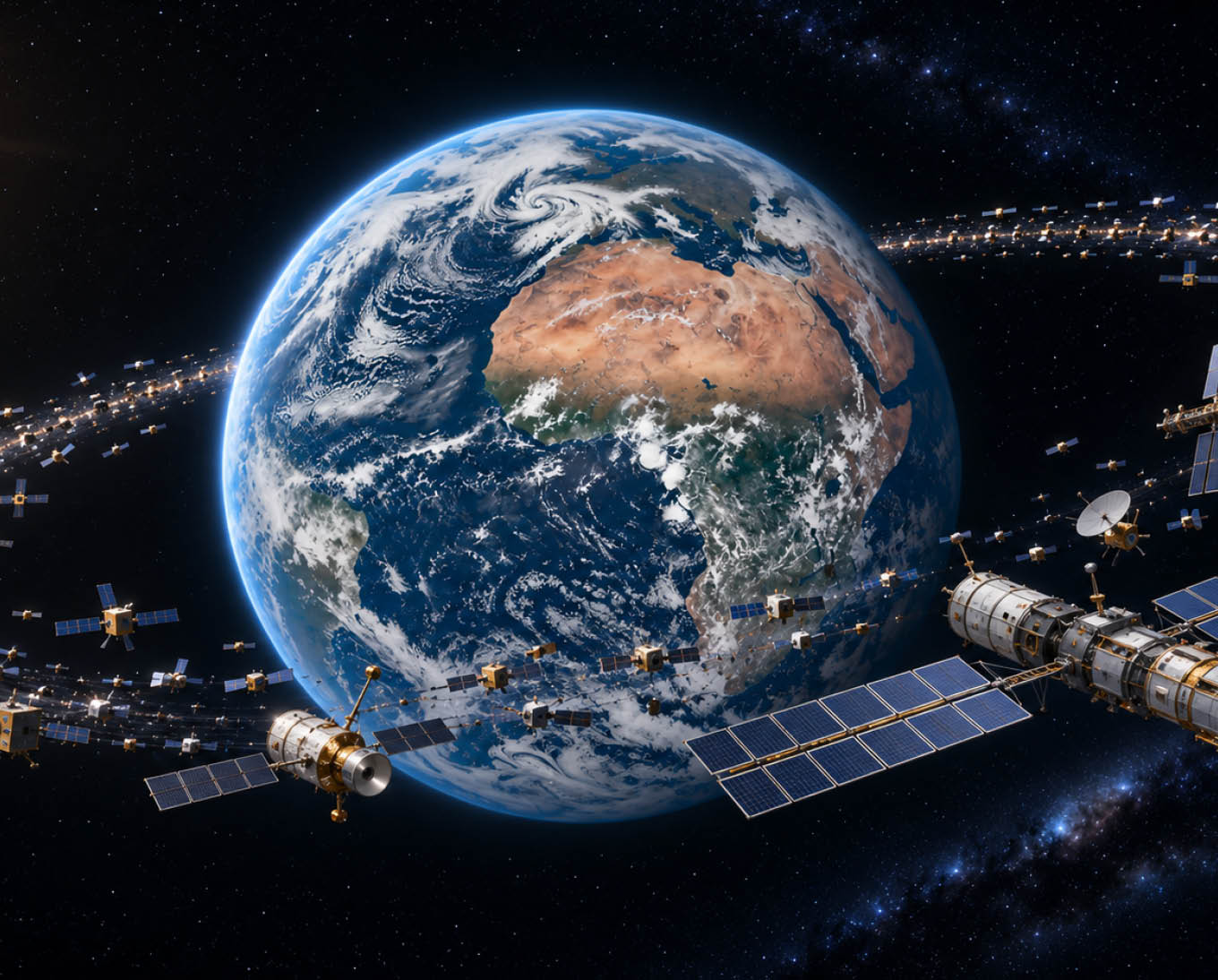
Lower launch costs and improved access to space are helping drive this new activity. An explosion in satellite manufacturing has also enabled machines to be built and launched into space at a rate that once seemed unfathomable. Today, nearly 17,000 satellites orbit Earth, a number that has tripled in just five years.
Yet there are genuine concerns about orbital congestion, cybersecurity, and launch access that must be balanced, too. How many satellites can we safely orbit around Earth, what is the risk of attack, and are there enough rockets to keep launching at such a tremendous pace?
The race to space
Much of the skyrocketing growth in satellites comes from one company: SpaceX. The US company accounts for more than two-thirds of satellites in orbit through its Starlink mega constellation, a group of more than 11,000 satellites found in low Earth orbit (LEO), which began launching in 2019.
Starlink beams the internet to Earth from space, and other companies and countries are racing to catch up. Amazon is launching a constellation of LEO satellites called Project Kuiper; Europe is developing the IRIS² (Infrastructure for Resilience, Interconnectivity and Security by Satellite) constellation; and several efforts in China aim to rival SpaceX, all in an attempt to develop sovereign space internet capabilities.
But it’s not just the internet that is spearheading space activity. Other companies want to build vast constellations of satellites for orbital data centers or space-based solar power, with some proposed fleets numbering in the tens of thousands.
There are several drivers behind this, says McDevitt. “It’s a little bit like Murder on the Orient Express — everybody did it,” he says. “The cost of getting things into orbit has fallen dramatically. Satellites are much smaller. The rapidity of launches. And the advent of cloud computing and AI capabilities.” While these developments have transformed access to space, launch costs and availability continue to vary depending on the provider and mission requirements.
These developments have also enabled satellites to become more capable, processing data in orbit without transmitting everything to Earth. The result is smarter satellites that can be launched in batches. For example, SpaceX regularly launches dozens of flat Starlink satellites at a time, stacked on top of each other like pancakes.
“In the past, we used to make satellites that were tailor-made for one particular mission,” says Ane Aanesland, cofounder and CEO of ThrustMe. “Now satellites are becoming uniform, and one system fits all. They are all the same for hundreds of satellites.”
This has enabled us to enter an “industrial space era” of satellite manufacturing, she says. “All these companies that started proving their business models over the last 10 years are now ramping up constellations, and it’s scaling very quickly.”
CONTRIBUTORS
Matteo Ainardi
Managing Partner, Aerospace & Defense
Sean McDevitt
Partner, Telecommunications, IT, Media & Electronics
Bela Virag
Managing Partner, Telecommunications, IT, Media & Electronics
Christoph Uferer
Partner, Telecommunications, IT, Media & Electronics
Ane Aanesland
Cofounder & CEO, ThrustMe
Carissa Christensen
CEO, BryceTech
Staying connected
SpaceX’s Falcon 9 rocket has been responsible for launching its Starlink satellites and many others, but the company is phasing it out as it brings its much larger Starship rocket online. This has created uncertainty in the industry about future access to space, including whether China or other players can challenge SpaceX’s dominance in the launch market.
“Starship is bringing unprecedented access to space, but what disruption will it bring?” asks Ainardi. “Will it be accessible for other companies, or will it only serve the SpaceX ecosystem?”
Satellite usage has changed a lot in the past few years. Historically, single satellites or small groups might be used for communications, imaging, and other purposes, but the recent influx of satellites has opened a wide range of use cases.
Starlink is the prime example. SpaceX says that more than 12 million people are currently signed up for the service, including both consumers and businesses. Starlink is also increasingly used to provide internet access on airplanes and ships at sea, as well as for military use and emergency situations.
“This is an unprecedented expansion of the satellite-connected domain,” says Ainardi. The capabilities may soon grow even further as SpaceX and other companies deploy direct-to-device satellites, which can beam the internet straight to phones and other devices rather than needing a separate antenna.
But LEO satellite constellations can do more than provide a basic internet connection. They enable merchant vessels to become “offices on the sea,” says Ainardi, while the adoption of internet connectivity on airplanes is “growing dramatically.” Today, nearly 50% of the global commercial aircraft fleet is equipped with in-flight connectivity, a figure expected to exceed 70% by 2035. At the same time, satellite connectivity is becoming easier for businesses to integrate into their existing networks. Rather than requiring extensive satellite expertise and complex integration, it can increasingly be incorporated much like a 4G router or fiber connection.
Space is also ingrained in other ways, such as through GPS satellites, which provide vital positioning, navigation, and timing data around the world. “We all use GPS,” says Bela Virag, Managing Partner with ADL’s TIME practice, not just for powering our maps but for financial transactions and other purposes, too. So much so that in 2023, the UK government calculated that the country would experience economic losses of £1.42 billion (~US $1.8 billion) in a single day from a satellite navigation system outage.
There are growing concerns about this actually happening, as GPS satellites are increasingly subjected to spoofing and jamming attacks, which can prevent users on the ground from accessing accurate location data. Companies such as Xona and TrustPoint are looking to build new GPS services in lower orbits around Earth, providing backups in the event of such attacks.
“You need resilient systems,” says Ainardi. “GPS today is the foundation of probably 90% of the apps that we have on our phone and of the essential services our society relies upon (energy and utility grids, transportation, financial services, ICT, etc.). When [it] stops working, the life of citizens becomes a mess.”
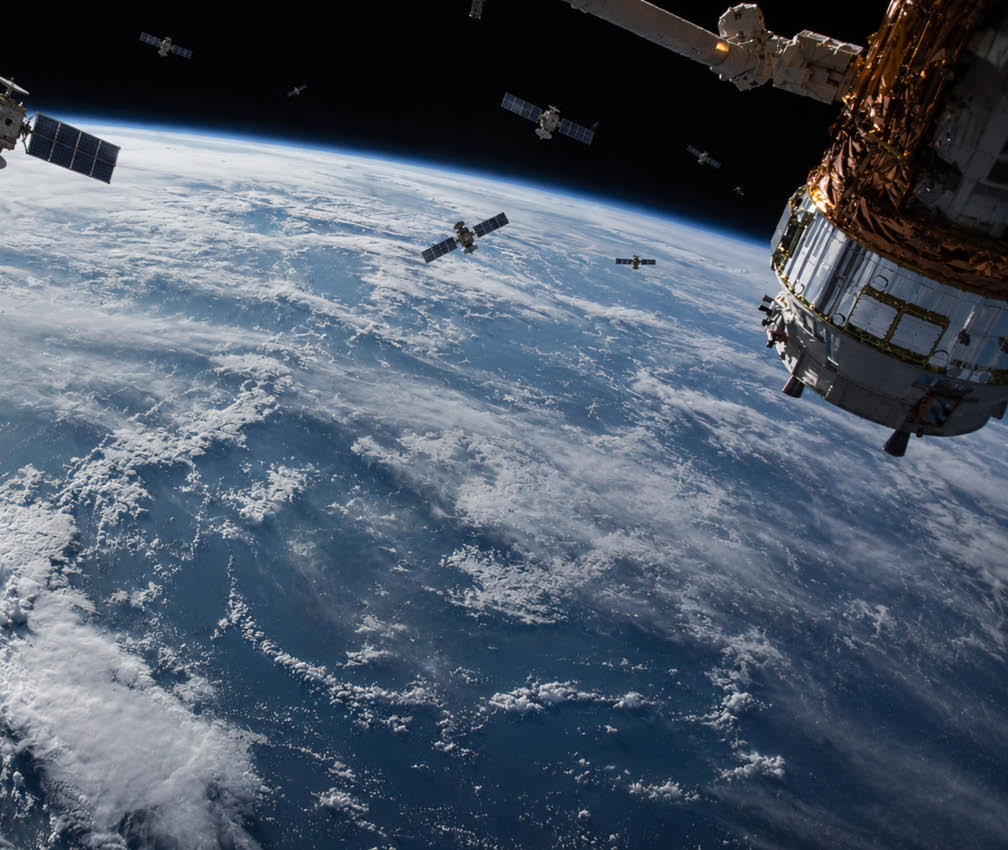
Satellite connectivity is becoming easier for businesses to integrate into their existing networks
Processing the data
The expansion of the satellite industry has also driven growth in Earth observation, including satellites operated by companies such as Planet in the US. According to EUSPA (EU Agency for the Space Programme), the global market for Earth observation data and services is projected to more than double, from €3.5 billion in 2024 to nearly €8 billion (~US $3.7–$8 billion) by 2034. These capabilities enable a wide range of applications on the ground, from tracking crop yields and wildfires to assessing insurance risk. Some insurers are “tuning their risk models” using satellite data alongside other sources, says Virag, including information on landslides, earthquakes, fires, and other hazards.
Satellite data is particularly useful in the agriculture and mining industries, helping to monitor irrigation patterns and identify areas where natural resources are more likely to be found, says Virag. In agriculture, for example, satellite data can help answer questions such as, “Do we have enough water in particular areas to sustain the crop throughout the growing cycle?”
Earth observation satellites can be applicable for other purposes, such as detecting greenhouse gases and methane leaks, says Carissa Christensen, founder and CEO of BryceTech. But she also notes some challenges in utilizing satellite data. “It’s been difficult for newer remote sensing companies to have the impact across the economy that they hoped for because some industries are just not set up to ingest the data,” she says.
That might open up new ways for processing satellite data. “There’s an opportunity for generative AI tools to help fill that gap,” says Christensen. AI is also finding other uses, particularly on the satellites themselves. Increasingly, satellites are being designed with AI chips on board, allowing them to process data in space without having to transmit it all to Earth.
“Satellites are getting smarter,” says Christensen. “There’s so much data to be collected and so many decisions to be made. Those tools can enable satellites to do that instantly without humans in the loop, and that is really enhancing productivity.”
But processing data in orbit is only part of the challenge. Aanesland points to another issue: how to efficiently get data down from satellites. We need more ground stations to get the data and reduce the number of humans involved in the process, she explains. “When it comes to downlinking data and operating satellites in space, there are still too many people in the loop. It’s not autonomous enough at the moment. That’s the next bottleneck for the industry.”
Satellites are being designed with AI chips on board, allowing them to process data in space without having to transmit it all to Earth
How many is too many?
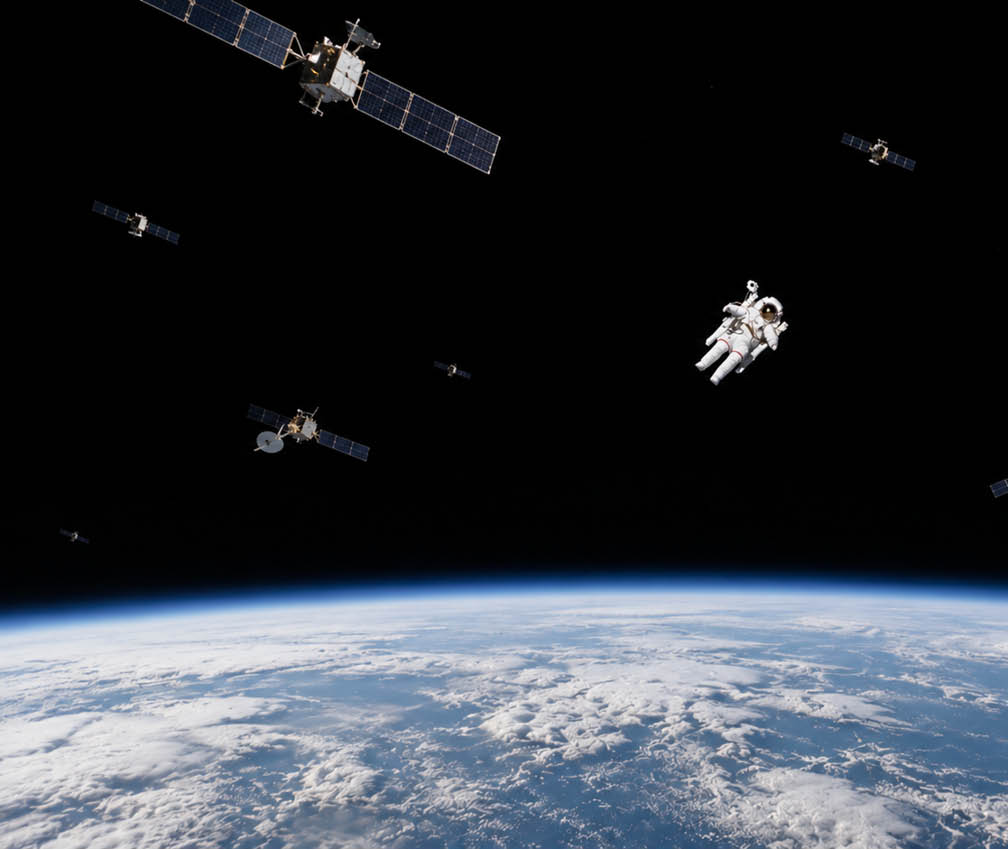
As the number of satellites grows, so do concerns about orbital congestion. In 2025, SpaceX reported that its Starlink satellites dodged collisions with themselves and other satellites about 300,000 times. As more satellites are launched, the potential for collisions in orbit will continue to increase.
So far, there has been only one collision between two satellites in orbit, when a US Iridium satellite and a defunct Russian satellite collided in 2009, producing about 2,000 pieces of trackable debris. More collisions could make parts of Earth’s orbit dangerous or even impossible to operate in because of the debris they create. Keeping the orbital environment safe is therefore a key consideration for any company operating in space or relying on satellite data.
“Collisions are not unthinkable anymore,” says Christoph Uferer, Partner with ADL’s TIME practice. “What do you do with space trash and how does this affect the number of satellites out there?” As businesses become increasingly reliant on satellite connectivity and data, orbital congestion could also threaten the reliability of services they depend on, making the long-term sustainability of space infrastructure an important consideration.
Beyond orbital congestion, geopolitical tensions are also raising concerns about the security and resilience of space infrastructure. These pressures have prompted countries to develop their own space capabilities. Europe, for example, is developing the IRIS² satellite constellation as it seeks to strengthen Europe’s strategic autonomy and reduce reliance on outside systems. Satellites themselves are also potential targets, with the US confirming in September 2026 that it has deployed weapons in orbit, although their exact nature remains unclear.
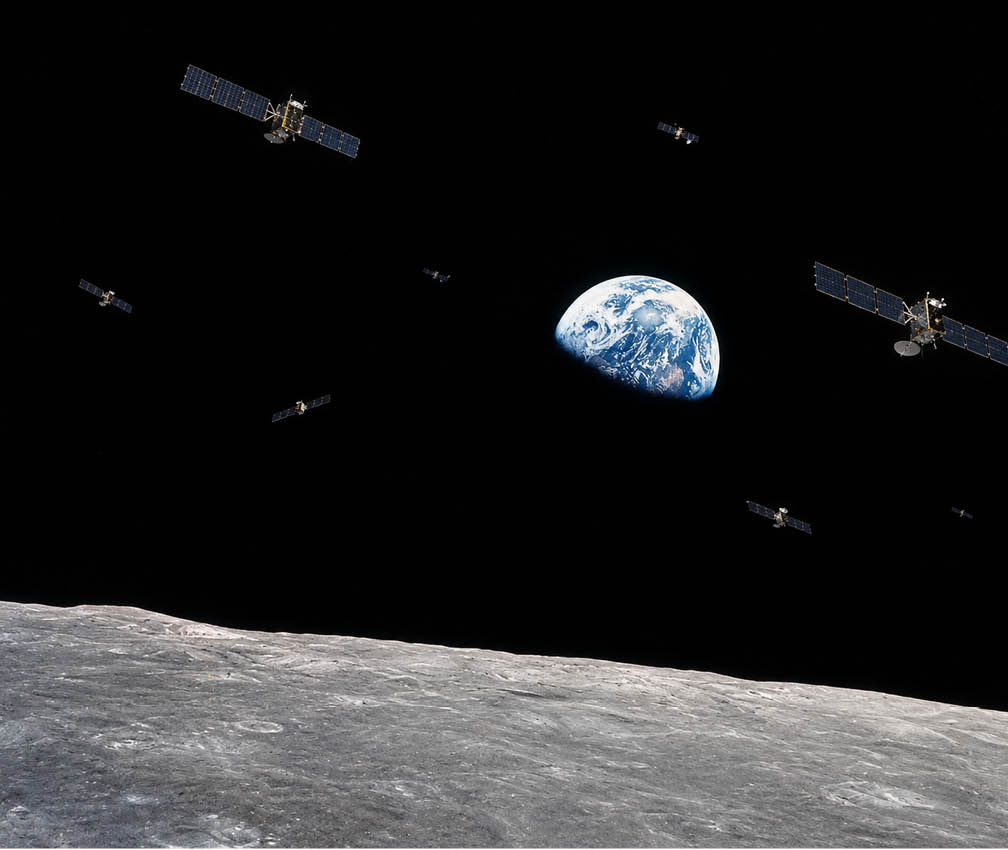
In 2025, SpaceX reported that its Starlink satellites dodged collisions with themselves and other satellites about 300,000 times
The CEO Agenda
For businesses, however, growing reliance on space brings opportunity as well as risk. The starting point is not necessarily to develop a “space strategy” but to ask where space could improve existing operations. Could satellite data provide better visibility into assets, environmental conditions, or emerging risks? Could satellite connectivity make operations more resilient or extend them to places terrestrial networks cannot reliably reach?
CEOs should also understand where their businesses may already depend on space without realizing it. Connectivity, navigation and timing, logistics, and third-party data services can all ultimately rely on satellites. As those dependencies grow, companies will need to consider their resilience: what happens if a navigation signal is disrupted, a satellite service becomes unavailable, or geopolitical tensions restrict access to a critical provider?
But beyond operational resilience lies a broader strategic question: as space becomes essential infrastructure, how should businesses position themselves within an increasingly concentrated supplier ecosystem?
SpaceX’s scale, vertical integration, and competitive pricing have helped accelerate the adoption of space-based services. Yet its dominance also raises questions about long-term dependency, particularly for companies whose operations may increasingly rely on satellite connectivity and other space-enabled capabilities.
For CEOs, the challenge is therefore not simply to identify the most competitive solution available today, but to preserve strategic flexibility over time. This means assessing supplier concentration, understanding the potential implications of technological lock-in, and considering how procurement decisions, partnerships, and industry collaboration could help sustain a more diverse and competitive ecosystem of space technology providers.
Ultimately, companies should be asking three questions: Where can space-based capabilities create a competitive advantage? Where are we becoming dependent on them? And how can we position ourselves today to preserve choice, resilience, and access to competitive solutions tomorrow?
“You no longer need to be a space company to utilize space,” says McDevitt. “To me, space is another layer of infrastructure that you can incorporate into your operating strategies.”
How can we position ourselves today to preserve choice, resilience, and access to competitive solutions tomorrow?
Key Takeaways
- Look for operational advantage. Assess where satellite connectivity or Earth observation could reduce costs, improve visibility, or extend reach.
- Be ready to use the data. Assess whether existing systems and workflows can turn growing volumes of satellite data into useful business insights.
- Map your space dependencies. Identify where connectivity, navigation, timing, logistics, or data already rely on satellite infrastructure.
- Build resilience into the strategy. Plan for disruption from cyber threats, signal interference, orbital congestion, or provider dependencies, and consider where alternative technologies or suppliers may be needed.
- Preserve strategic choice. Consider how supplier relationships, procurement, and partnerships can maintain viable alternatives and reduce long-term dependence on any single provider.